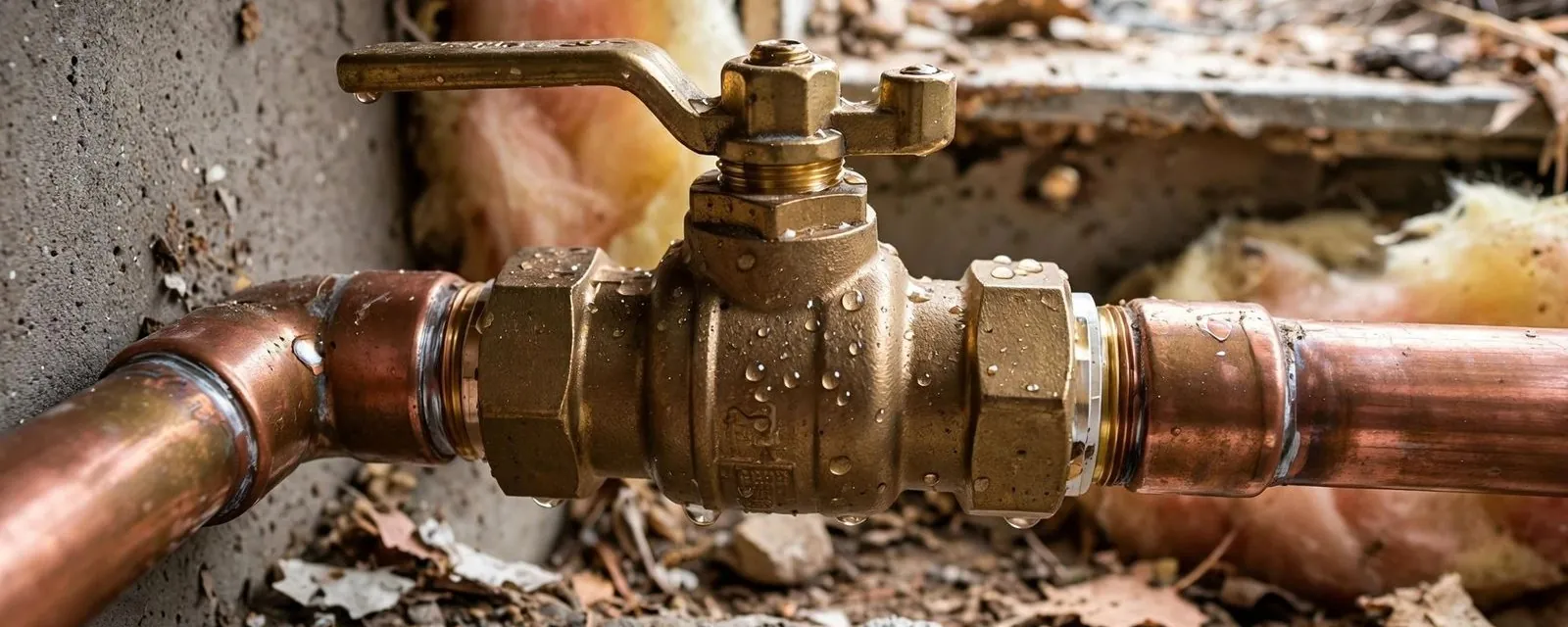
A water heater has at least three valves, and each fails in its own way. The temperature and pressure (T&P) relief valve is a safety device, the drain valve empties the tank, and the shutoff valve controls cold water into it. Replacing any of them is a small job when the tank is sound, and a warning when the tank is not.
If water is pooling around the heater and you cannot tell where it is coming from, close the cold shutoff above the tank, switch off the power or set the gas control to off, and call.
The four valves and how they fail
| Valve | Job | Failure sign | Typical fix |
|---|---|---|---|
| T&P relief valve | Opens if temperature or pressure gets too high | Drips or spits from the discharge pipe | Replace the valve, then find out why it opened |
| Drain valve | Lets you empty the tank | Leaks at the spout or will not open | Replace with a brass drain valve |
| Cold shutoff valve | Stops water going into the tank | Will not close, drips at the stem | Replace with a full-port ball valve |
| Gas control valve | Controls gas flow to the burner | No flame or no response | Replace the control, on gas heaters only |
A dripping relief valve: do not just cap it
A relief valve that drips is doing its job or has worn out. If it is the first, there is a cause, such as high water pressure or a closed system with no expansion room. If it is the second, a new valve fixes it. Plugging the discharge pipe or screwing in a cap is dangerous because it removes the safety.
A plumber tests the pressure at the house and checks for an expansion tank. If the pressure is high, a pressure reducing valve or an expansion tank is the real fix. Our water heater repair visit covers this kind of diagnosis.
Before you call for a valve problem
- Note where the water is dripping from, and photograph it.
- Feel whether the discharge pipe is hot or wet.
- Check whether the dripping started after a hot shower or at night.
- Look for rust streaks at the base of the tank, which can mean the tank itself is leaking.
- Locate the cold shutoff valve and make sure you can turn it.
When a valve problem means a new tank
A valve that leaks at its threads into the tank, or a tank with rust at the seams, cannot be saved by a new valve. Water leaking from the tank shell is the end of the tank. If your heater is also more than about ten years old, a replacement usually costs less than repeated repairs. We tell you which case you have, and our water heater replacement page lays out what a swap includes.
Replacing the shutoff and drain valves
An old gate valve on the cold line often seizes, and forcing it can break the stem. A ball valve gives a quarter-turn shutoff and is easier to use in an emergency. Replacing it means closing the main valve, draining the line and soldering or fitting a new valve. Swapping the plastic drain valve for a brass one avoids a failure when you flush the tank.
Pressure and altitude around Payson
Water pressure rises as you go downhill, by about 0.43 pounds per square inch for each foot of drop. Elk Ridge sits roughly 700 feet above Payson, so homes at the low end of a sloped street can see much higher static pressure than a house at the top.
High pressure is a common reason a relief valve opens. Check the pressure with a gauge on an outdoor faucet and compare it with the 80 psi mark often used as an upper limit. Our Elk Ridge page explains what we do about it, and the pressure reducing valve work is the same for homes in Salem.
How to test your relief valve safely
Many makers suggest lifting the lever on the T&P valve once a year so a bit of water runs into the discharge pipe. If the valve does not flow or does not reseat and keeps dripping, replace it. The water can be very hot, so keep clear of the pipe outlet and have a bucket handy.
Never test a valve that is already weeping or that sits on a heater with signs of overheating. Shut off the heater and call instead.
What a replacement visit includes
- Shut off the cold supply and power or gas to the heater.
- Relieve pressure, drain enough water to work and remove the old valve.
- Check the discharge pipe is the right size, slopes down and ends at a safe place.
- Fit the new valve with the correct rating for the tank.
- Restore water, check every joint and relight the heater.
The International Plumbing Code (IPC) requires a relief valve on storage water heaters, with a discharge pipe that runs downward to a safe point and has no valve in it.
Water heater leaking now?
Call.
Water heater valve questions
If it is a steady stream or the water is very hot, yes. Shut off power or gas and call. A slow drip is urgent but less dangerous.
Some owners replace a drain valve. Relief valve work is better left to a plumber, because the discharge pipe and settings must be right.
Heating in a closed system raises pressure. If there is no expansion tank, the valve may open briefly when the heater runs. A plumber can test it.
The price depends on the valve, access and whether the water must be drained. We quote before work begins, and the quote changes if the tank has to be replaced.