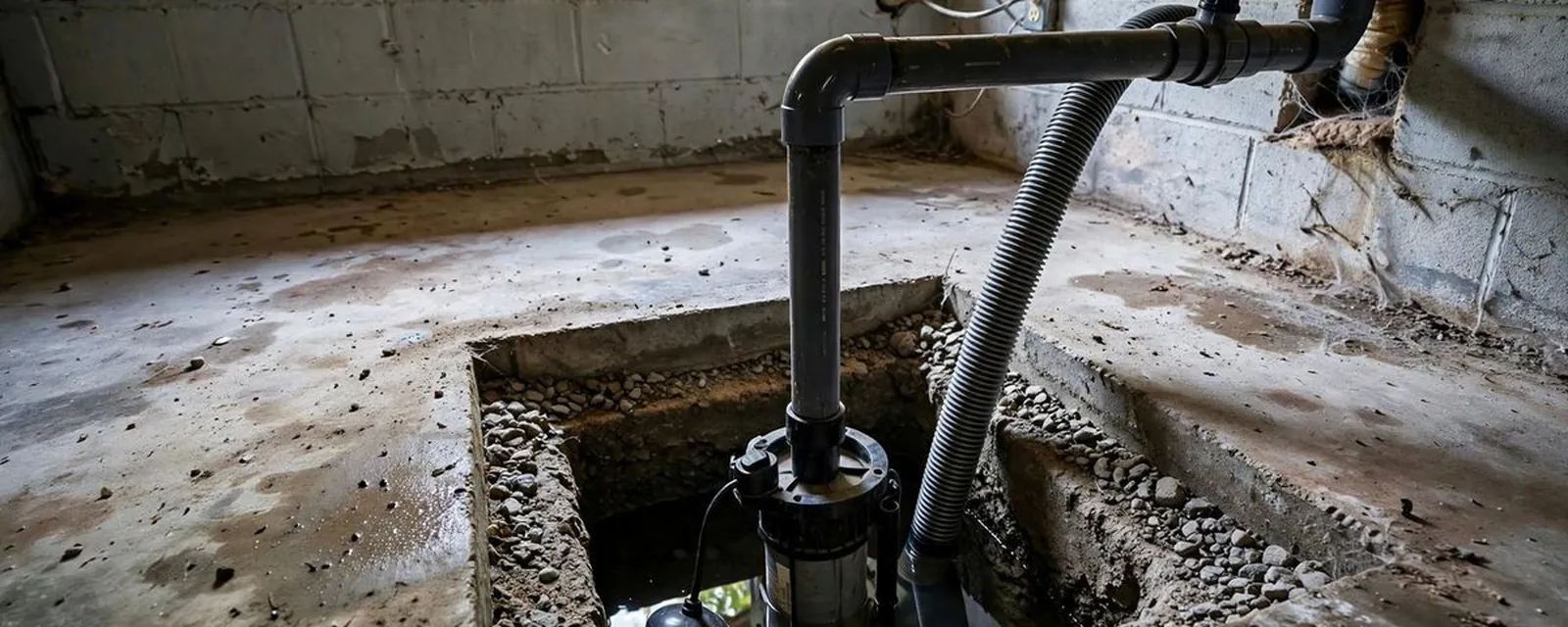
Sump pump repair in Payson, UT matters when water is rising in a basement or crawl space and the pump is silent, humming or running without emptying the pit. A plumber tests the pump, float and discharge line, then repairs or replaces what has failed.
Call and describe the problem. Payson sits below Mount Nebo and Payson Canyon, where snowmelt travels down toward town, and a pump that fails then has little time before water spreads across a basement floor.
Basement water rising: what to do now
While you wait for the plumber
- Unplug electrical items on the basement floor, but only if the area around the outlet is dry.
- Do not wade into standing water if the panel or outlets could be wet.
- Check that the pump is plugged in and that the breaker or GFCI has not tripped.
- Lift the float switch by hand to see whether the pump starts. If it does, the float is stuck or failed.
- Move belongings upstairs and call.
Why sump pumps fail
Stuck float
The float gets caught on the pit wall or debris, so the pump never starts or never stops.
Burned-out motor
A pump that runs constantly through a wet season can wear out.
Clogged intake
Silt and gravel clog the inlet screen and the impeller.
Failed check valve
Water flows back into the pit after each cycle and makes the pump work harder.
Power loss
Storms often cut power exactly when the pump is needed most.
Undersized pump
A pump that is too small cannot keep up in peak flow.
Repair, replace or add a backup
| Option | Strengths | Trade-offs |
|---|---|---|
| Submersible pump | Quiet, sits in the pit, handles heavy flows | Harder to service, pit access needed |
| Pedestal pump | Motor above the pit, easier to service | Louder, takes more space |
| Battery backup pump | Runs during power outages | Battery needs testing and replacement |
| Water-powered backup | No battery required | Needs adequate water pressure and may waste water |
A pump that is more than about ten years old or that cycles constantly is a replacement candidate. We test the existing pit and discharge line, and recommend the pump size that matches the flow.
Where the water goes
A discharge line must carry water well away from the foundation. Water that is discharged next to the house just returns to the pit. In winter, an exposed discharge line can freeze and block, so the line needs proper slope and an outlet that does not clog with ice.
In Payson and nearby towns that irrigate from pressurized secondary systems, over-watering near foundations adds to the water your pit handles. Salem's city irrigation system, built in 2008, delivers canal water to residents' yards for outdoor use, and a lawn watered heavily right at the foundation can show up in the pit. Adjust sprinklers first, then look at the pump.
Related waterproofing and drainage
A pump is one part of a basement water plan. If water enters through wall cracks or at the floor joint, basement waterproofing is the fix. If the water is sewer-related, not groundwater, sewer line cleaning applies. We tell you which problem you have.
What affects the cost of sump pump service
We quote before starting.
Many policies exclude groundwater flooding unless you added a water backup endorsement. Check yours. Call (385) 488-1892 for your number.
The International Plumbing Code (IPC) requires sewage ejector pits to be sealed and vented, which separates them from ordinary groundwater sumps. Where sump water may be discharged is set by local rules, so ask your building office.
Basement taking on water?
Call.
Sump pump questions
Yes. Call and ask what help is available. Call (385) 488-1892 and describe what the pump is doing.
Test it a couple of times a year, and before the wet season. Pour a bucket of water into the pit and watch the pump start, empty the pit and shut off.
If your basement has flooded before or you finish the space, a backup is worth considering. Power often fails during storms.
The pump sits in the pit, but the discharge line outside can freeze. We check the outlet and slope so the line drains.