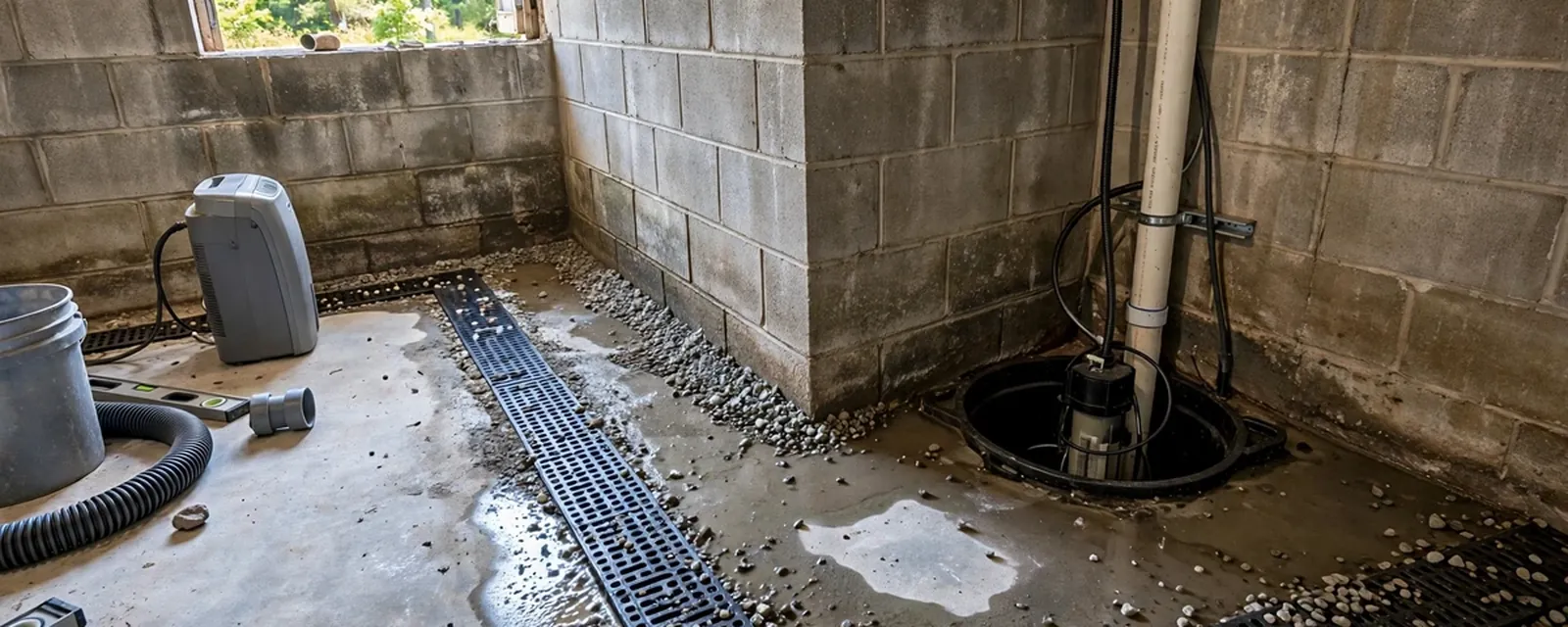
Basement waterproofing in Payson, UT is the work of stopping or managing water that enters below grade through walls, the floor joint or window wells. It is a planned service. If your basement is flooding right now, call for sump pump repair first, and we will talk about waterproofing once the water is under control.
The most important step is a correct diagnosis. Sealing a wall does not help if the water is coming from a broken pipe, and a pump does not help if the water comes from a sewer backup.
Is it groundwater, plumbing or something else?
| Source | How it looks | Right approach |
|---|---|---|
| Groundwater through the wall | Damp or wet walls after rain or thaw, white mineral stains | Exterior drainage, grading, interior drain and pump |
| Floor joint seepage | Water at the wall-floor joint during wet seasons | Interior perimeter drain with a sump |
| Window well overflow | Water pouring through a basement window | Clean the well, add a cover and drain |
| Plumbing leak | Wet area near a pipe, water heater or washing machine | Leak detection and pipe repair |
| Sewer backup | Dirty water from floor drain or shower | Sewer line cleaning |
Why Payson basements see water
Payson sits at the base of the mountains, and snowmelt from Payson Canyon and the slopes of Mount Nebo moves toward the valley each spring. Water that soaks into the soil can rise against a basement wall, and it finds any crack, tie hole or floor joint.
Heavy irrigation adds to it. Pressurized irrigation systems in the area deliver canal water for outdoor use, and a lawn that is soaked right at the foundation sends water downward. Before any waterproofing, check that downspouts discharge well away from the house and the soil slopes away from the wall.
Cheap fixes to try first
Low-cost steps that often help
- Extend downspouts several feet away from the foundation.
- Regrade soil so it slopes away from the house.
- Reduce watering within a few feet of the foundation.
- Clean and cover window wells.
- Seal visible cracks with a product made for wet concrete, as a temporary measure.
Interior drainage and sump systems
When groundwater keeps coming, an interior drain collects it. A perimeter channel along the footing leads water to a sump pit, and a pump moves it outside. It works without digging up the yard.
The system needs a good pump, a backup plan and a discharge line that carries water well away. That is why waterproofing and sump pumps go together.
Exterior waterproofing and drainage
Exterior work digs down along the foundation, seals the wall and installs drainage at the footing. It handles water before it reaches the wall, and it is the most thorough option, but it is disruptive and costs more. It makes sense when walls are failing or a new addition is being built.
Storm drains and yard drainage
Water that pools in a yard or a window well can be directed to a storm drain or a dry well. Storm drain lines clog with leaves and silt, and we clear them as part of drainage work. The first question is always where the water can go. Do not connect a sump discharge to the sanitary sewer, since that is not allowed in most places and can overload the system.
What affects the cost of basement waterproofing
We quote after a diagnosis.
Insurance rarely covers groundwater seepage. Look for a water backup endorsement on your policy. Call (385) 488-1892 for your number.
Foundation drainage is governed by local building rules, and permit needs vary, so ask your building office before drainage work starts. The 2021 International codes that Utah adopted statewide, including the International Plumbing Code (IPC) for sump and drain connections, are the baseline, and older homes were built under older rules.
Basement water problem?
Call for a diagnosis.
Basement waterproofing questions
Yes. We look at the walls, floor, drains, pipes and grading to find the source. Then we recommend the least expensive fix that works.
Interior systems manage water that already reached the wall. Exterior work stops it before it arrives. The choice depends on the damage, the budget and whether the exterior can be dug.
It addresses the water. Smell and mold may need cleaning, drying and dehumidifying afterward.
No. Connecting sump discharge to the sanitary sewer is not allowed in most places. We route it outside, well away from the house.